

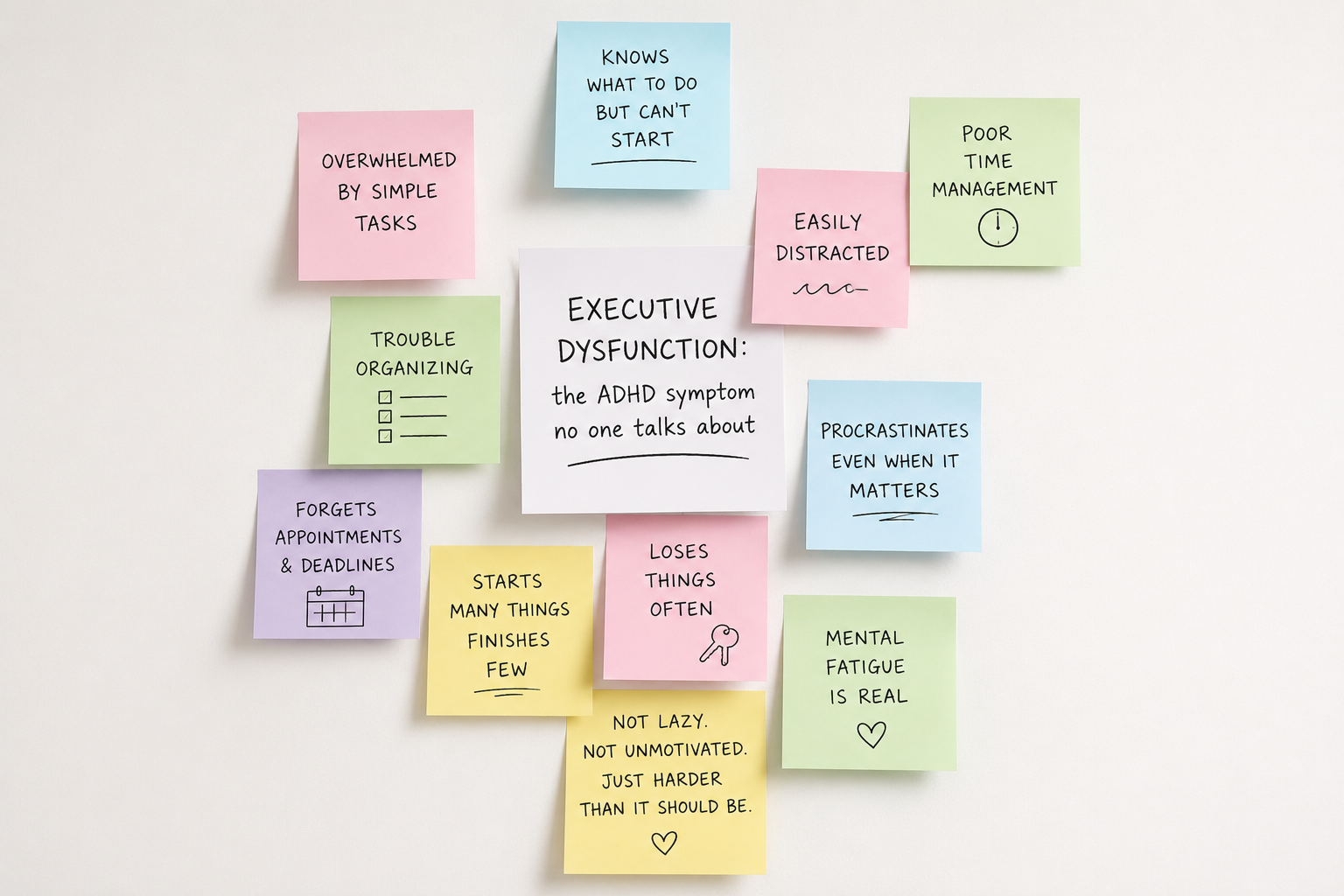
Have you ever looked at a task that you wanted to do—but just couldn’t seem to get started?
Maybe you’ve stared at a pile of laundry for days, missed important deadlines despite your best intentions, or felt completely overwhelmed trying to decide where to begin. You know what needs to be done, but it’s as if your brain refuses to cooperate.
Many people describe this as feeling “lazy,” “unmotivated,” or “bad at adulting.” In reality, these struggles may be related to executive dysfunction.
Executive dysfunction is not a diagnosis on its own. Instead, it refers to difficulties with the mental skills that help us plan, organize, prioritize, remember information, regulate emotions, and complete everyday tasks. While executive dysfunction is commonly associated with ADHD, it can also occur in other mental health and medical conditions.
At InnerMind Psychiatry & Wellness, comprehensive psychiatric evaluations help determine whether executive dysfunction is related to ADHD, anxiety, depression, or another condition. Evaluations are available for adolescents and adults on Long Island and throughout New York through secure telehealth.
What Are Executive Functions?
Executive functions are the brain’s “management system.” They help you organize your thoughts, make decisions, stay focused, and carry out plans.
These skills allow you to:
- Start tasks
- Stay focused
- Organize information
- Prioritize responsibilities
- Manage your time
- Shift between tasks
- Control impulses
- Remember important information
- Solve problems
- Regulate emotions
When these skills aren’t working efficiently, everyday responsibilities can feel much harder than they should.
What Does Executive Dysfunction Feel Like?
People with executive dysfunction often say things like:
- “I know what I need to do—I just can’t get myself to start.”
- “I feel overwhelmed before I even begin.”
- “My brain freezes when I have too much to do.”
- “I’m always running late, no matter how hard I try.”
- “I constantly forget things.”
- “Everything feels harder than it should.”
These experiences can be frustrating because the problem isn’t a lack of intelligence or effort. Many people with executive dysfunction are highly capable and work incredibly hard just to keep up with daily demands.
Common Signs of Executive Dysfunction
Executive dysfunction can affect many aspects of daily life.
Common symptoms include:
- Difficulty starting tasks
- Chronic procrastination
- Trouble finishing projects
- Frequently losing or misplacing items
- Poor time management
- Missing deadlines
- Difficulty prioritizing responsibilities
- Feeling overwhelmed by simple tasks
- Forgetting appointments or commitments
- Difficulty following multi-step directions
- Trouble switching between tasks
- Difficulty making decisions
- Emotional frustration when plans change
Not everyone experiences the same symptoms, and they may vary depending on the situation.
Is Executive Dysfunction the Same as ADHD?
Not exactly.
Executive dysfunction is a symptom, while ADHD is a neurodevelopmental condition.
Many people with ADHD experience executive dysfunction because ADHD affects the brain systems involved in planning, organization, attention, and self-regulation.
However, executive dysfunction can also occur in people without ADHD.
What Else Can Cause Executive Dysfunction?
Several conditions can affect executive functioning, including:
- Anxiety disorders
- Depression
- Chronic stress
- Sleep deprivation
- Traumatic brain injury
- Autism spectrum disorder
- Learning disorders
- Certain neurological conditions
For example, someone with anxiety may have difficulty starting a task because they are worried about making mistakes. Someone with depression may struggle because of low energy and decreased motivation. Someone with ADHD may know exactly what they want to do but have difficulty organizing and initiating the task.
Although these experiences can look similar, the underlying causes—and treatment approaches—may differ.
Executive Dysfunction Is More Than Procrastination
Everyone procrastinates occasionally.
Executive dysfunction is different.
Many people with executive dysfunction genuinely want to complete their work. They may spend hours thinking about what needs to be done while feeling unable to take the first step.
This can lead to guilt, frustration, self-criticism, and the mistaken belief that they simply need to “try harder.”
How Executive Dysfunction Affects Daily Life
Executive dysfunction can affect nearly every area of life.
At work or school, it may lead to:
- Missed deadlines
- Difficulty organizing assignments
- Trouble keeping up with emails
- Problems prioritizing tasks
- Inconsistent performance despite strong abilities
At home, it may result in:
- Household chores piling up
- Difficulty paying bills on time
- Losing important paperwork
- Forgetting appointments
- Feeling overwhelmed by everyday responsibilities
In relationships, executive dysfunction may cause:
- Forgetting important dates
- Difficulty following through on plans
- Appearing distracted during conversations
- Frustration related to organization or time management
These challenges can affect self-confidence and create unnecessary stress if the underlying cause is not recognized.
How Is Executive Dysfunction Evaluated?
There is no single test that diagnoses executive dysfunction.
Instead, a comprehensive psychiatric evaluation looks at the bigger picture.
Your provider may discuss:
- Current symptoms
- Childhood history
- School and work performance
- Daily functioning
- Medical history
- Sleep habits
- Family history
- Anxiety, depression, and other mental health conditions
Because several conditions can contribute to executive dysfunction, understanding the complete picture is essential before recommending treatment.
Can Executive Dysfunction Be Treated?
Yes.
Treatment depends on the underlying cause.
For individuals with ADHD, treatment may include medication, behavioral strategies, and organizational techniques.
If anxiety, depression, poor sleep, or another condition is contributing to executive dysfunction, treating those concerns may also improve attention, planning, and productivity.
Many people also benefit from practical strategies such as:
- Breaking large tasks into smaller steps
- Using calendars and reminders
- Creating consistent routines
- Limiting distractions
- Working on one task at a time
- Using timers to improve focus
- Prioritizing adequate sleep and regular exercise
The most effective treatment plan is individualized and based on a thorough evaluation.
Frequently Asked Questions
Is executive dysfunction a diagnosis?
No. Executive dysfunction is a group of symptoms that can occur in ADHD and several other medical or mental health conditions.
Does executive dysfunction always mean you have ADHD?
No. Although executive dysfunction is common in ADHD, it can also occur with anxiety, depression, chronic stress, sleep deprivation, autism spectrum disorder, and certain neurological conditions.
Can adults have executive dysfunction?
Yes. Many adults experience executive dysfunction, whether related to ADHD or another condition. Some people are not diagnosed until adulthood, especially if they developed effective coping strategies earlier in life.
Can medication help executive dysfunction?
If executive dysfunction is related to ADHD, medication may improve attention, organization, and task initiation for some individuals. If another condition is contributing, treatment will depend on the underlying cause.
When should I seek an evaluation?
If difficulties with organization, attention, planning, or completing everyday tasks are interfering with work, school, relationships, or daily life, it may be helpful to schedule a comprehensive psychiatric evaluation.
The Bottom Line
Executive dysfunction is much more than being disorganized or occasionally procrastinating. It affects the brain’s ability to plan, organize, prioritize, and complete everyday tasks—and it can have a significant impact on work, school, relationships, and self-confidence.
While executive dysfunction is commonly associated with ADHD, it can also occur in anxiety, depression, chronic stress, sleep disorders, and other conditions. Understanding the underlying cause is the first step toward finding effective treatment.
At InnerMind Psychiatry & Wellness, comprehensive psychiatric evaluations help identify the factors contributing to executive dysfunction so that an individualized treatment plan can be developed. Psychiatric evaluations and medication management are available for adolescents and adults on Long Island and throughout New York through secure telehealth.