

Making the decision to seek psychiatric care can feel like a big step, especially if you have never met with a psychiatric provider before. You may be wondering what you will be asked, whether you will receive a diagnosis, or if you will be expected to start medication right away.
A psychiatric evaluation is simply an opportunity to better understand what you have been experiencing and determine what type of support may be helpful.
At InnerMind Psychiatry & Wellness, psychiatric evaluations are designed to be comprehensive, collaborative, and individualized. Whether you are seeking help for anxiety, depression, ADHD, OCD, mood changes, or another mental health concern, the first appointment is about understanding the bigger picture—not simply assigning a diagnosis or prescribing medication.
What Is a Psychiatric Evaluation?
A psychiatric evaluation is a comprehensive assessment of your mental health, current symptoms, medical history, and overall functioning.
Your psychiatric provider will ask questions to better understand what brought you to treatment and how your symptoms are affecting different areas of your life.
The goal is not only to identify symptoms, but also to understand when they began, what may be contributing to them, and how they are affecting your daily life.
For example, difficulty concentrating does not automatically mean someone has ADHD. Problems with attention can also occur with anxiety, depression, poor sleep, chronic stress, substance use, medical conditions, and other concerns.
A thorough psychiatric evaluation helps look at these possibilities before developing a treatment plan.
What Will We Talk About During the First Appointment?
Every evaluation is different because every patient’s history and concerns are different.
Your provider may ask about:
- What brought you to treatment
- Current symptoms and concerns
- When your symptoms began
- Mood and anxiety
- Attention and concentration
- Sleep and energy
- Appetite
- Work or school functioning
- Relationships and social functioning
- Current and previous medications
- Previous mental health treatment
- Medical history
- Family psychiatric history
- Alcohol, cannabis, nicotine, and other substance use
- Significant life experiences or stressors
- Safety concerns
You do not need to prepare the “right” answers. The purpose of these questions is to understand your experiences and develop a clearer picture of what may be contributing to your symptoms.
Will I Receive a Diagnosis at My First Appointment?
Sometimes.
Certain diagnoses may become clear during the initial evaluation. Other situations require additional assessment, information, or follow-up before a diagnosis can be made confidently.
Symptoms can overlap considerably between mental health conditions.
For example, anxiety can cause difficulty concentrating. Depression can cause decreased motivation and problems completing tasks. ADHD can contribute to feeling overwhelmed and chronically behind. Trauma, poor sleep, medical conditions, and substance use can also affect mood, attention, and functioning.
For this reason, psychiatric diagnosis should involve more than matching symptoms to a checklist.
Sometimes the most appropriate answer after the first appointment is: we need more information.
Will I Be Prescribed Medication at the First Appointment?
Not necessarily.
A psychiatric evaluation does not automatically mean that medication will be prescribed.
If medication may be helpful, your provider will discuss the potential benefits, risks, side effects, alternatives, and what you can expect from treatment. You should also have an opportunity to ask questions and discuss any concerns you may have about taking medication.
Depending on your individual situation, recommendations may include:
- Psychiatric medication
- Psychotherapy
- Lifestyle or behavioral changes
- Laboratory testing
- Medical follow-up
- Further psychological or ADHD assessment
- Coordination with your therapist or primary care provider
- A combination of approaches
The goal is to develop a treatment plan that makes sense for you.
What If I Already Take Psychiatric Medication?
Bring an updated list of your medications, including the dose and how often you take them.
It is also helpful to discuss medications you have tried previously, how well they worked, why they were discontinued, and any side effects you experienced.
Your provider may recommend continuing your current medication, adjusting the dose, changing medications, or considering another treatment strategy.
However, seeing a new psychiatric provider does not guarantee that an existing medication—particularly a controlled medication—will automatically be continued. Your provider must first complete an independent evaluation and determine what treatment is clinically appropriate and safe.
What If I’m Nervous About the Appointment?
Feeling nervous before your first psychiatric appointment is common.
Mental health can be difficult to talk about, particularly with someone you are meeting for the first time.
You do not need to tell your entire life story perfectly or remember every detail in chronological order. Your provider will guide the conversation and ask questions along the way.
It is also completely appropriate to say:
“I’m not sure.”
“I don’t remember.”
or
“I’m not ready to talk about that yet.”
Building trust takes time.
How Should I Prepare for a Psychiatric Evaluation?
You do not need to do extensive preparation, but having some basic information available can make the appointment more productive.
Consider having:
- A current medication and supplement list
- Names of psychiatric medications you have previously tried
- Relevant medical diagnoses
- Recent laboratory results, if available
- Contact information for your therapist or primary care provider
- A list of questions or concerns you want to discuss
You may also want to think about what you would most like to improve.
Your treatment goals might include sleeping better, decreasing anxiety, improving concentration, feeling less depressed, managing intrusive thoughts, becoming more emotionally stable, or simply understanding why you have been feeling the way you do.
What Happens After the Evaluation?
At the end of the evaluation, your provider will discuss their clinical impressions and recommendations with you.
If medication is started or adjusted, follow-up appointments are important. Psychiatric medication management is an ongoing process that involves monitoring symptoms, effectiveness, side effects, and overall functioning.
Treatment plans can change over time. Finding the right medication or dose sometimes requires gradual adjustments rather than getting everything exactly right at the first appointment.
Psychiatric care works best as a collaboration. Your feedback about what is improving, what is not improving, and how you are tolerating treatment helps guide future decisions.
Can Psychiatric Evaluations Be Done Through Telehealth?
Yes. Many psychiatric evaluations and medication-management appointments can be completed through secure telehealth when clinically appropriate.
Telehealth allows patients to meet with their psychiatric provider from a private location while still completing a comprehensive assessment.
At InnerMind Psychiatry & Wellness, telehealth psychiatric services are available to eligible patients located in New York, making psychiatric care accessible to individuals on Long Island and throughout the state.
Frequently Asked Questions
How long does a psychiatric evaluation take?
The length of an initial psychiatric evaluation varies by provider and individual needs. Initial appointments are generally longer than routine medication-management follow-ups because your provider needs time to understand your symptoms, history, previous treatment, medical background, and treatment goals.
Is a psychiatric evaluation only for people who want medication?
No. An evaluation can help clarify symptoms, possible diagnoses, and appropriate treatment options. Medication may be one recommendation, but it is not automatically the right treatment for every person.
Can a psychiatric provider diagnose ADHD?
Yes. ADHD can be evaluated by appropriately trained mental health professionals, including Psychiatric Mental Health Nurse Practitioners (PMHNPs). A comprehensive ADHD evaluation should consider current symptoms, childhood history, functioning across different settings, and other conditions that may cause similar symptoms.
What’s the difference between a therapist and a psychiatric provider?
Therapists generally focus on psychotherapy and behavioral or emotional interventions. Psychiatric providers, including psychiatrists and PMHNPs, can evaluate and diagnose psychiatric conditions and prescribe medication when appropriate. Many patients benefit from working with both.
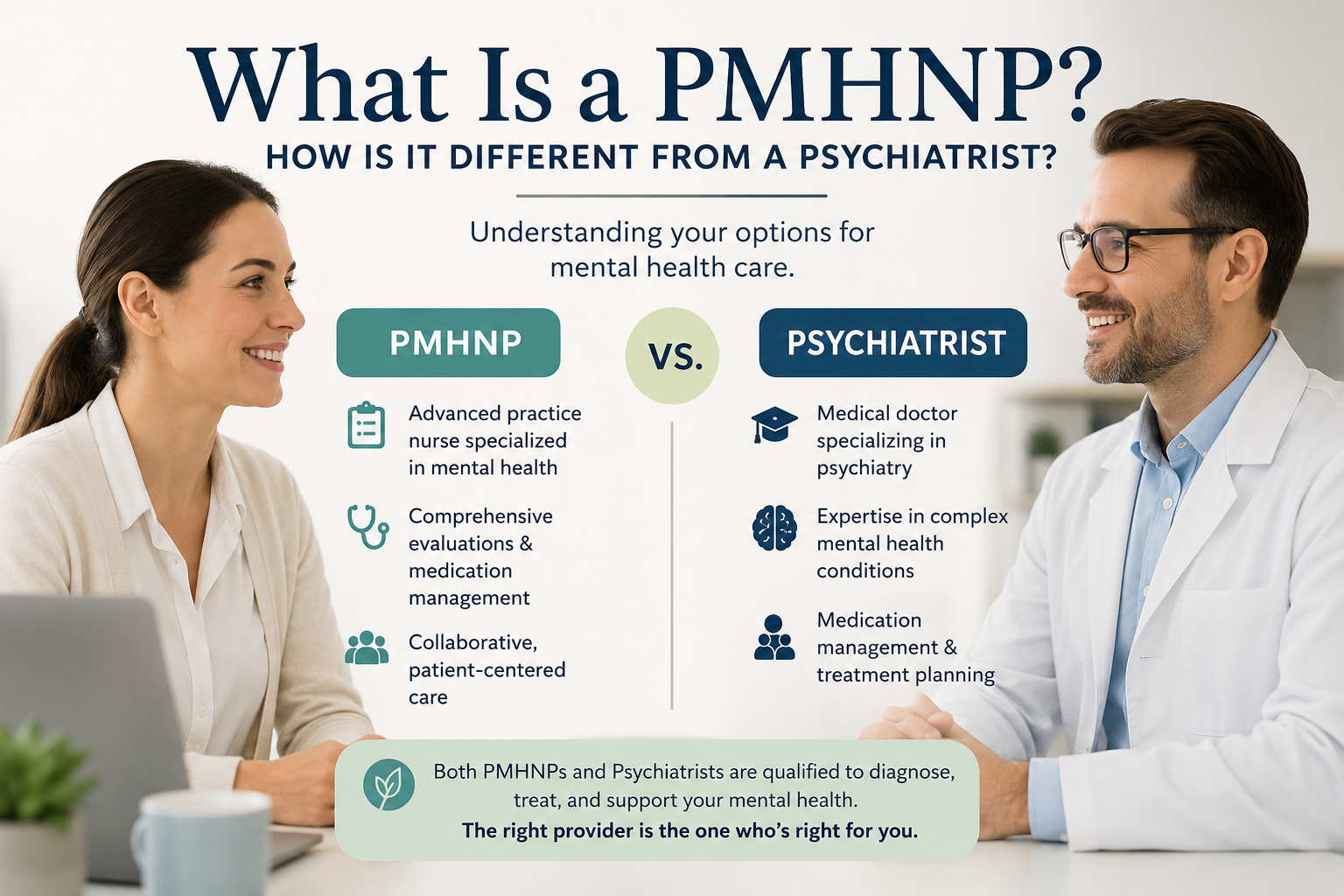
What is a PMHNP?
A Psychiatric Mental Health Nurse Practitioner (PMHNP) is an advanced practice nurse with specialized graduate-level training in psychiatric assessment, diagnosis, and treatment. PMHNPs can evaluate mental health conditions and prescribe psychiatric medications in accordance with state laws and regulations.
The Bottom Line
Your first psychiatric evaluation is not about being judged, receiving a label, or automatically leaving with a prescription.
It is an opportunity to slow things down and look at the complete picture: what you are experiencing, how it is affecting your life, what may be contributing to it, and what treatment options may help.
At InnerMind Psychiatry & Wellness, I provide comprehensive psychiatric evaluations and medication management for adolescents and adults on Long Island and throughout New York via secure telehealth. My approach is collaborative and evidence-based, with treatment recommendations individualized to each patient’s symptoms, history, needs, and goals.
If you have been struggling with anxiety, depression, ADHD, OCD, mood changes, or other mental health concerns, a psychiatric evaluation can be an important first step toward understanding what is happening and determining what comes next.