

Difficulty concentrating. Racing thoughts. Restlessness. Feeling overwhelmed. Trouble finishing tasks.
If you’ve experienced these symptoms, you may have wondered whether they’re caused by ADHD, anxiety, or both.
The truth is that ADHD and anxiety can look remarkably similar. In fact, many people with ADHD are initially diagnosed with anxiety, while others have both conditions at the same time. Because treatment can be very different, understanding the distinction is important.
At InnerMind Psychiatry & Wellness, comprehensive psychiatric evaluations help determine whether symptoms are related to ADHD, an anxiety disorder, another mental health condition, or a combination of factors. Evaluations are available for adolescents and adults on Long Island and throughout New York through secure telehealth.
Why ADHD and Anxiety Are Often Confused
ADHD and anxiety share many overlapping symptoms.
Both conditions can cause:
- Difficulty concentrating
- Restlessness
- Racing thoughts
- Sleep problems
- Irritability
- Feeling overwhelmed
- Difficulty completing tasks
- Forgetfulness
- Trouble managing responsibilities
Although these symptoms may look similar on the surface, the reasons behind them are often different.
What Is ADHD?
Attention-deficit/hyperactivity disorder (ADHD) is a neurodevelopmental condition that affects attention, executive functioning, organization, working memory, and impulse control.
People with ADHD often know what they need to do—but struggle to consistently organize, initiate, and complete tasks.
Common symptoms include:
- Difficulty sustaining attention
- Frequently losing items
- Forgetting appointments or deadlines
- Chronic procrastination
- Difficulty organizing tasks
- Poor time management
- Easily becoming distracted
- Impulsivity
- Restlessness
- Difficulty completing projects
Symptoms typically begin during childhood, although many people are not diagnosed until adulthood.
What Is Anxiety?
Anxiety disorders involve excessive fear or worry that is difficult to control and interferes with daily life.
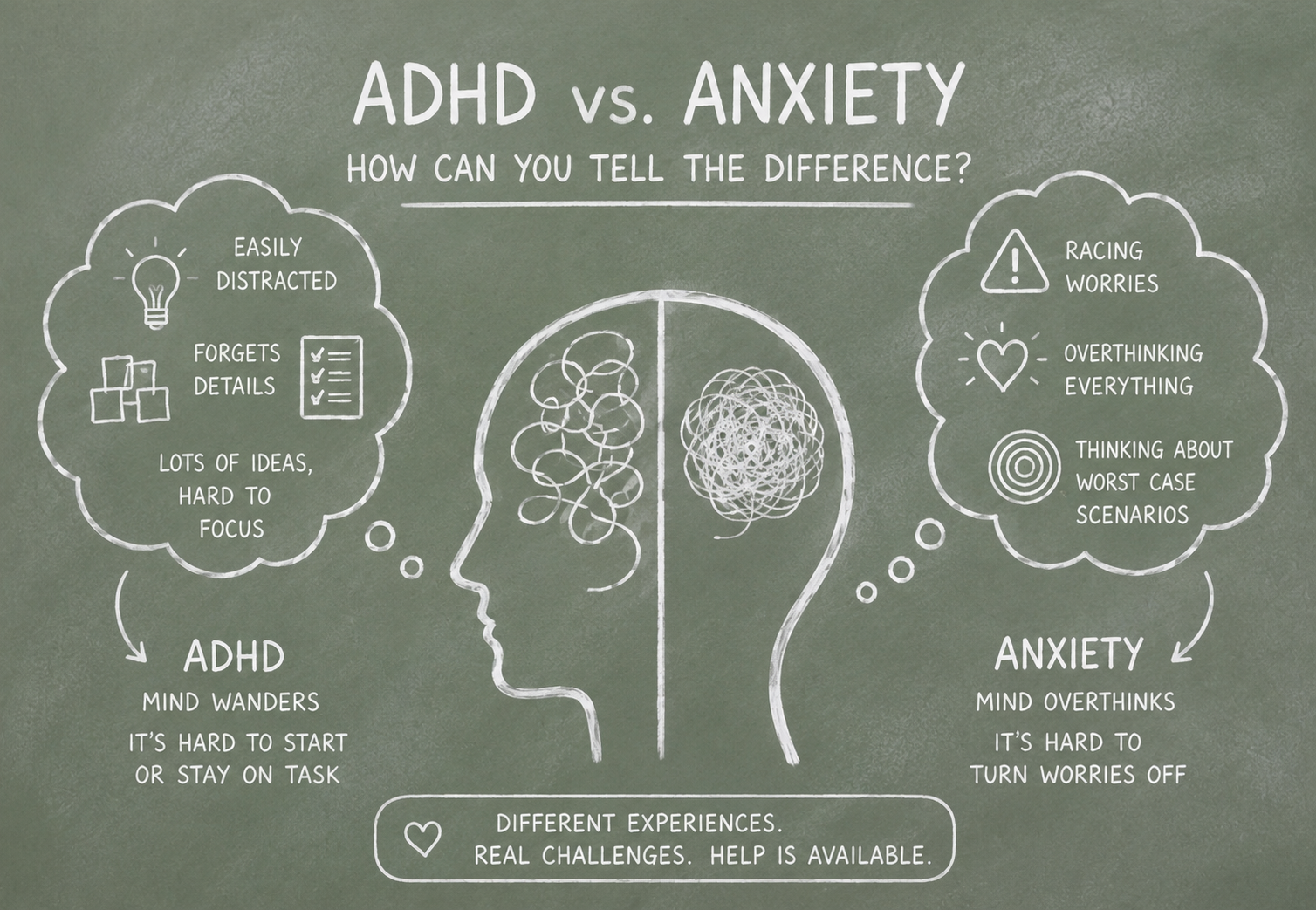
Instead of being distracted because attention naturally shifts, individuals with anxiety often struggle to concentrate because their minds are occupied by worry, fear, or repetitive thoughts.
Common symptoms include:
- Excessive worry
- Feeling on edge
- Muscle tension
- Racing thoughts
- Difficulty relaxing
- Sleep disturbance
- Avoidance of feared situations
- Panic attacks (in some anxiety disorders)
- Physical symptoms such as nausea, rapid heartbeat, or sweating
How Concentration Problems Differ
One of the biggest differences involves why concentration is impaired.
ADHD
Attention shifts because the brain has difficulty regulating focus.
Someone with ADHD may become distracted by noises, conversations, phones, unrelated thoughts, or interesting activities. They often struggle to stay engaged with tasks that feel repetitive or uninteresting but may become intensely focused on activities they find highly engaging—a phenomenon often called hyperfocus.
Anxiety
Attention is disrupted because worry occupies mental space.
Someone with anxiety may read the same paragraph several times because they are thinking about an upcoming presentation, finances, relationships, or something that could go wrong.
The difficulty is not necessarily maintaining attention—it is that worry continually interrupts it.
Restlessness Looks Different Too
People with ADHD often feel restless because they naturally seek stimulation or have difficulty sitting still for long periods.
People with anxiety often feel restless because their bodies are responding to stress and heightened nervous system activity.
Although both may appear fidgety, the reasons behind the behavior are different.
Executive Dysfunction vs. Worry
Executive functioning refers to the brain’s ability to plan, organize, prioritize, start tasks, and manage time.
People with ADHD commonly struggle with executive functioning.
For example:
- They intend to start a project but repeatedly put it off.
- They lose track of time.
- They underestimate how long tasks will take.
- They forget appointments despite good intentions.
Someone with anxiety may delay starting a task because they are afraid of making mistakes, fear failure, or worry they won’t perform well.
The end result—procrastination—may look similar, but the underlying reason is different.
Can You Have Both ADHD and Anxiety?
Yes.
In fact, ADHD and anxiety commonly occur together.
Living with untreated ADHD can create chronic stress. Missing deadlines, forgetting responsibilities, struggling to stay organized, or feeling overwhelmed can eventually contribute to anxiety.
Likewise, anxiety can make ADHD symptoms feel worse by making concentration and organization even more difficult.
When both conditions are present, treatment often addresses each one individually.
How Is the Diagnosis Made?
There is no single test that distinguishes ADHD from anxiety.
A comprehensive psychiatric evaluation includes:
- A detailed discussion of your current symptoms
- Childhood history
- Academic and work functioning
- Medical history
- Family history
- Review of previous treatments
- Screening for anxiety, depression, sleep disorders, substance use, and other conditions that may affect attention
The goal is to understand the complete picture rather than focusing on one symptom alone.
Why the Correct Diagnosis Matters
Although ADHD and anxiety can look similar, treatment is not always the same.
Depending on the diagnosis, treatment may include:
- Medication
- Psychotherapy
- Behavioral strategies
- Organizational skills
- Stress management
- Lifestyle changes
- Treatment for co-occurring conditions
An accurate diagnosis helps guide treatment decisions and improves the likelihood of finding an approach that addresses the underlying cause of your symptoms.
Frequently Asked Questions
Can anxiety cause ADHD-like symptoms?
Yes. Anxiety can interfere with concentration, memory, and attention, making it look similar to ADHD.
Can ADHD cause anxiety?
Yes. Many individuals with ADHD develop anxiety related to chronic stress, missed deadlines, academic struggles, work demands, or difficulties staying organized.
Can stimulant medication make anxiety worse?
For some individuals, stimulant medications may increase feelings of anxiety. For others, treating ADHD may actually reduce anxiety because daily functioning improves. The effect varies depending on the individual and whether anxiety is also present.
How do I know if I have ADHD or anxiety?
Because these conditions share many overlapping symptoms, a comprehensive psychiatric evaluation is the best way to determine what may be contributing to your difficulties.
Can I have both ADHD and anxiety?
Absolutely. ADHD and anxiety commonly occur together, and both conditions can be treated.
The Bottom Line
ADHD and anxiety share many symptoms, including difficulty concentrating, restlessness, racing thoughts, and feeling overwhelmed. However, the reasons behind those symptoms are often very different.
Understanding whether your symptoms are related to ADHD, anxiety, or both is important because treatment should be tailored to the underlying condition—not just the symptoms themselves.
At InnerMind Psychiatry & Wellness, comprehensive psychiatric evaluations help identify the factors contributing to your symptoms so that together we can develop an individualized treatment plan that supports your long-term mental health and daily functioning. Psychiatric evaluations and medication management are available for adolescents and adults on Long Island and throughout New York through secure telehealth.