
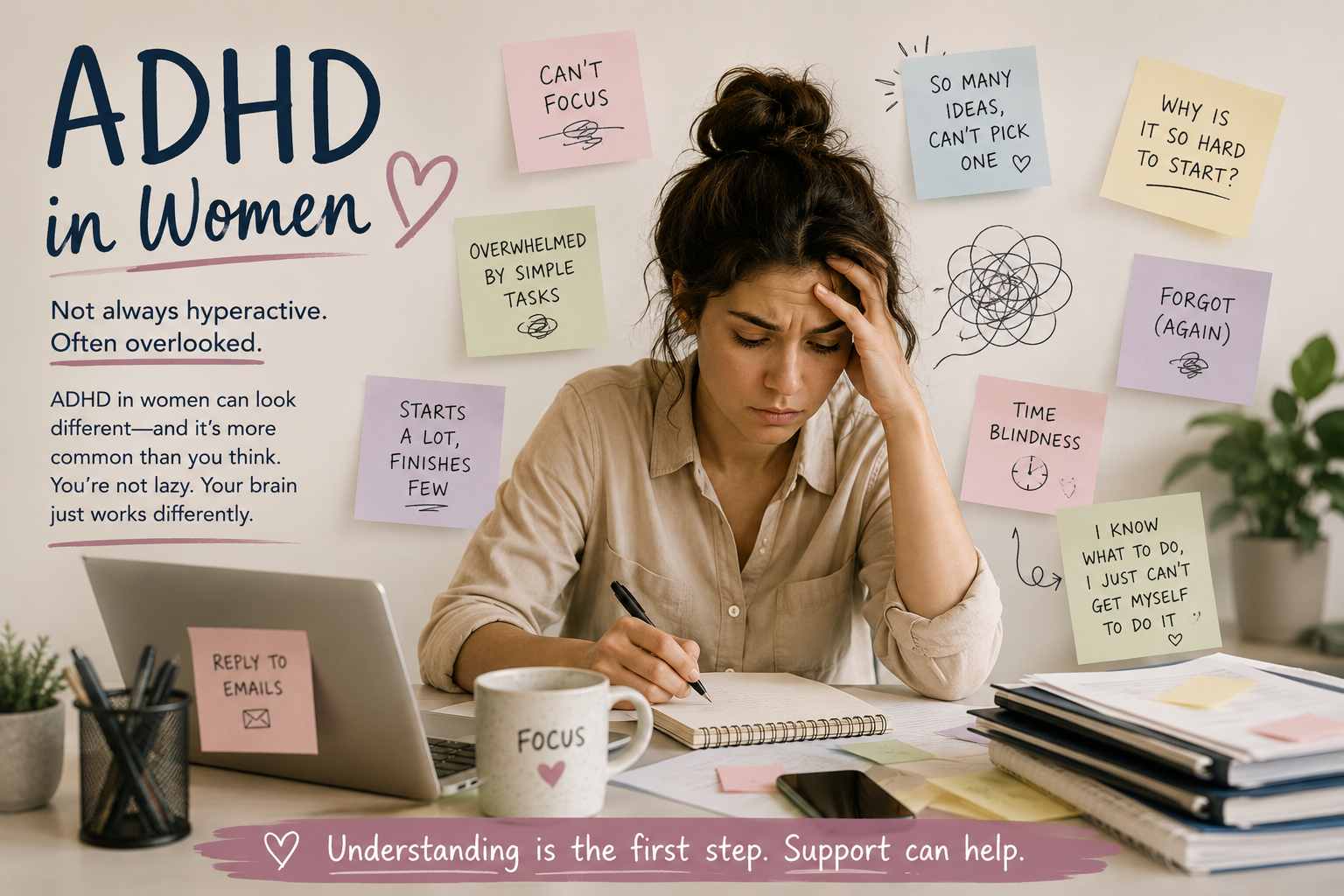
Attention-deficit/hyperactivity disorder (ADHD) has long been thought of as a condition that primarily affects young boys who are hyperactive and disruptive in school. While many boys with ADHD fit this stereotype, many girls and women do not.
As a result, countless women reach adulthood without realizing they have ADHD. Instead, they may spend years believing they are simply disorganized, lazy, forgetful, overly emotional, or “not trying hard enough.”
Today, we know that ADHD often looks different in women than it does in men. Recognizing these differences is an important step toward receiving an accurate diagnosis and appropriate treatment.
At InnerMind Psychiatry & Wellness, comprehensive psychiatric evaluations for ADHD are available for adolescents and adults on Long Island and throughout New York via secure telehealth.
Why Is ADHD Frequently Missed in Women?
Historically, much of the early ADHD research focused on boys. Girls were less likely to be referred for evaluation because their symptoms were often quieter and less disruptive in the classroom.
Instead of climbing on desks or constantly interrupting, many girls with ADHD learned to compensate. They worked harder, masked their struggles, or developed strategies to hide their difficulties.
As a result, many women weren’t diagnosed until college, the workplace, parenthood, or another period of increased responsibility exposed challenges they had been managing for years.
ADHD Symptoms in Women Can Look Different
Although every person with ADHD is unique, women are often more likely to experience symptoms related to inattention rather than hyperactivity.
Common symptoms may include:
- Difficulty staying organized
- Frequently losing or misplacing items
- Forgetting appointments or deadlines
- Trouble starting or finishing tasks
- Chronic procrastination
- Feeling mentally overwhelmed
- Difficulty prioritizing responsibilities
- Frequently feeling “behind”
- Trouble focusing during conversations or meetings
- Making careless mistakes despite trying hard
Many women also describe feeling as though their minds are constantly racing or that they are juggling dozens of thoughts at once.
The Role of Masking
Many women become experts at hiding their symptoms.
This is often referred to as masking—consciously or unconsciously working harder to appear organized, attentive, or successful despite significant internal effort.
Examples of masking include:
- Spending excessive time planning to compensate for forgetfulness
- Double- and triple-checking everything
- Arriving extremely early to avoid being late
- Relying heavily on calendars, reminders, and lists
- Avoiding situations where difficulties might become noticeable
Although these strategies can be helpful, they often come at the cost of exhaustion, stress, and self-criticism.
ADHD Is Often Mistaken for Anxiety or Depression
One reason ADHD is frequently overlooked in women is that its symptoms can overlap with other mental health conditions.
Women with undiagnosed ADHD may seek treatment for:
- Anxiety
- Depression
- Chronic stress
- Burnout
- Low self-esteem
In some cases, anxiety develops because keeping up with daily responsibilities requires tremendous effort. Others experience depression after years of feeling like they are falling short despite working incredibly hard.
Some women have both ADHD and another mental health condition, making a comprehensive psychiatric evaluation especially important.
Emotional Symptoms Are Often Overlooked
Many people think ADHD only affects attention, but emotional regulation can also be a challenge.
Some women experience:
- Feeling easily overwhelmed
- Frustration with small setbacks
- Difficulty managing stress
- Emotional sensitivity
- Trouble shifting attention away from upsetting thoughts
- Feeling emotionally “drained” after busy days
These symptoms are real and can significantly affect work, relationships, and overall quality of life.
Life Changes May Make ADHD More Noticeable
Many women successfully compensate for ADHD symptoms until life becomes more demanding.
Symptoms may become more noticeable during:
- College
- Starting a career
- Becoming a parent
- Managing a household
- Returning to school
- Perimenopause or menopause, when hormonal changes may influence attention and executive functioning
A later diagnosis does not mean ADHD suddenly developed—it often means the demands of daily life have exceeded the coping strategies that previously worked.
What Does an ADHD Evaluation Involve?
There is no single blood test or brain scan that diagnoses ADHD.
A comprehensive psychiatric evaluation includes:
- A detailed discussion of your current symptoms
- Your childhood history
- Academic and work functioning
- Medical history
- Family history
- Screening for anxiety, depression, trauma, sleep disorders, and other conditions that may contribute to attention difficulties
Because several conditions can mimic ADHD, a thorough evaluation is important to ensure the diagnosis is accurate.
How Is ADHD Treated?
Treatment depends on each person’s symptoms, goals, and medical history.
Treatment options may include:
- ADHD medication when appropriate
- Behavioral strategies and organizational skills
- Sleep optimization
- Stress management
- Regular exercise
- Treatment of co-occurring anxiety or depression when present
Many women benefit from combining medication with practical strategies that improve organization, time management, and daily functioning.
Frequently Asked Questions
Can ADHD develop in adulthood?
Current evidence suggests that ADHD begins in childhood. However, many women are not diagnosed until adulthood because their symptoms were overlooked or successfully masked for years.
Why wasn’t I diagnosed as a child?
Girls with ADHD often have fewer disruptive behaviors than boys and may perform well academically despite significant effort. As a result, their symptoms may not have been recognized.
Can anxiety look like ADHD?
Yes. Anxiety can affect concentration, memory, and attention. ADHD can also lead to anxiety because of chronic stress and difficulty managing responsibilities. A comprehensive evaluation helps distinguish between these conditions.
Can women have both ADHD and anxiety?
Absolutely. ADHD commonly occurs alongside anxiety disorders, depression, and other mental health conditions. Identifying all contributing factors is important when developing a treatment plan.
Is it too late to be diagnosed with ADHD?
No. Many women receive an ADHD diagnosis in their 20s, 30s, 40s, or even later. Receiving a diagnosis as an adult can help explain longstanding struggles and open the door to effective treatment and support.
The Bottom Line
ADHD in women often looks different from the stereotypes many people associate with the condition. Rather than being disruptive or hyperactive, women may quietly struggle with organization, attention, emotional regulation, and overwhelming mental fatigue while working hard to hide their difficulties.
If you’ve spent years feeling like you’re constantly trying harder than everyone else just to keep up, it’s worth talking with a qualified mental health professional. A comprehensive evaluation can help determine whether ADHD, another condition, or a combination of factors may be contributing to your symptoms.
At InnerMind Psychiatry & Wellness, comprehensive psychiatric evaluations and individualized treatment are available for adolescents and adults on Long Island and throughout New York. The goal is to better understand your symptoms, provide an accurate diagnosis, and develop a treatment plan that supports your long-term success and well-being.